|
My Tektronix Memories |
|
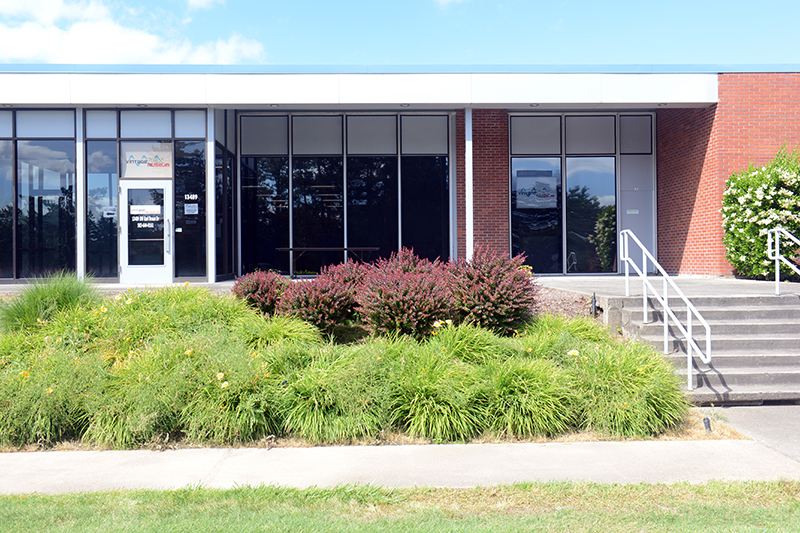
vintageTEK.org opened their first brick and mortar Tektronix museum in 2010 at 4620A SW Beaverton Hillsdale Highway, Beaverton, OR. After 6 years of operation they have moved to the Tektronix campus at 13489 SW Karl Braun Dr, Beaverton, OR, 97077. The phone number is (503) 644-0161. Come visit.
I digitized a number of historic Tektronix films and videos that were in many different formats and donated them to the site. They are well worth watching and are on the vintageTEK website. They also have a number of historic photos on their site. If you are in the area it is worth it to stop by and see some classic products with handcrafted workmanship.
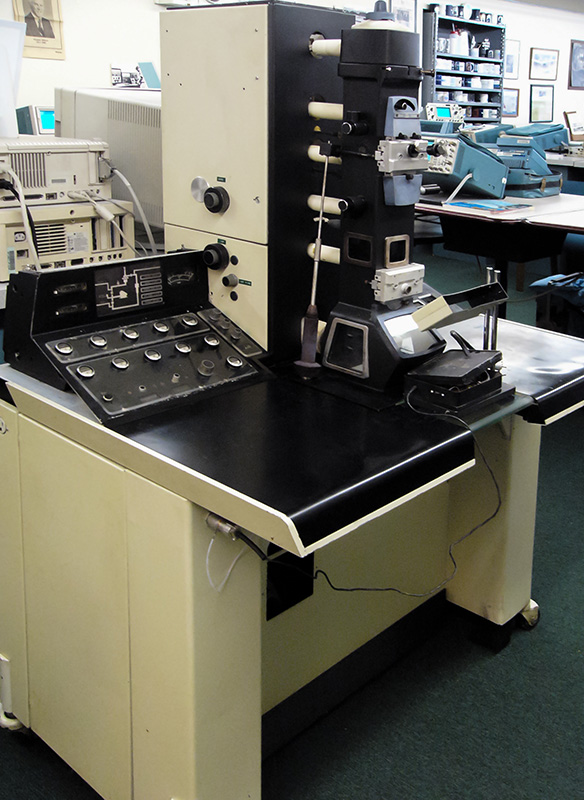
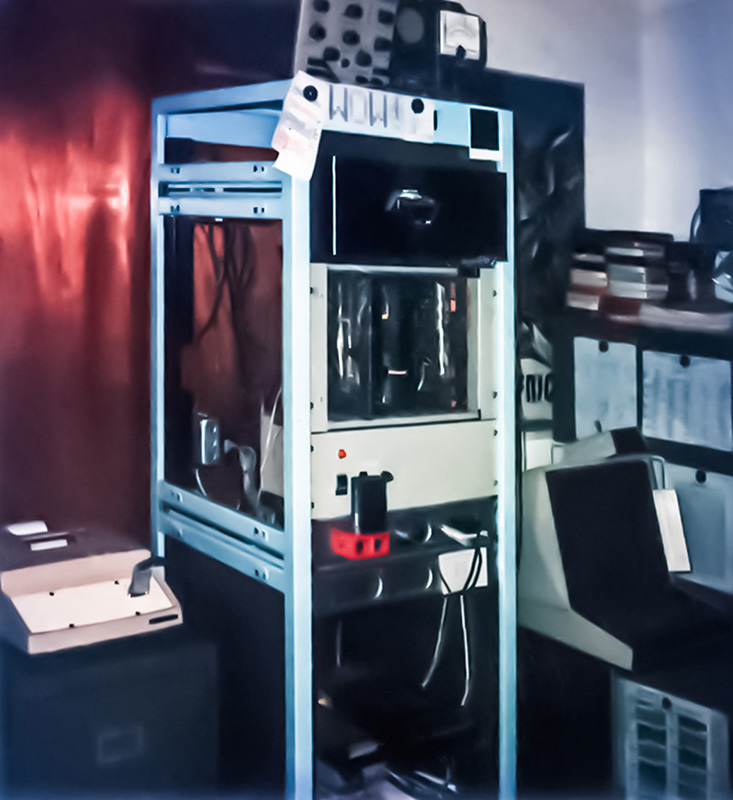
I cleaned up a prototype 1968 Transmission Electron Microscope that was donated to the museum. It's a pretty cool design and was built in 1968. It is nearly all hand-built on vectorboards. That contraption in the middle front is the Episcotister which works in conjunction with the Wobbulator that modulates the beam from side to side. The Episcotister contained a rotating drum (missing) with slits cut at 90 degrees which synchronized with the Wobbulator so the operator could view stereoscopic 3D images. Pretty cool for the late 1960's. More information is on the vintageTEK website exhibit page.
Tektronix 4010 Graphics Termial
Tektronix introduced the 4010 Computer Graphics Display Terminal in 1972 as a follow-on to the T-4002. This product leveraged their proprietary CRT technology with a Direct View Storage Tube (DVST) and made high performance computer graphics affordable. In the 1970s and 1980s you could visit any high technology company and see Tektronix terminals everywhere. We have restored a 4010 and 4013 terminal at the vintageTEK museum with a free-running demo of various computer graphics files (thanks to Kurt Kruger). The terminal in this demo runs at 2400 baud which is 4X slower than the maximum 9600 baud capability of the hardware. The display is crisp and sharp with no jaggies (a feature of the analog display generator) and still looks great 40 years later. The 1024 x 768 resolution was incredible for the time and the 4014 19" terminal had an amazing 4096 x 3072 resolution, high by even today's standards. This video captures the magic of displaying graphics on a DVST and was made on August 10, 2012 at the vintageTEK museum.
Tektronix Commercials
This 12 minute audio commercial from March of 1996 was played when telephone customers were on-hold. 37% of the products (marked with an *) are ones that I had personal involvement in bringing to market. This audio file is now on the vintageTEK website.
400 Series Netstations*
Logic Analyzer Browser and Offline
Phaser 540 Color Laser Printer
TDS700A Digital Oscilloscope
TDS300 Series Oscilloscopes
200 Series Netstations*
THS Series TekScope
Cable Testers
Digital Oscilloscopes
Communications Convergence Test Instrumentation
Phaser Color Printers
Profile Video Disk Recorder*
Netstations*
Video Test Instrumentation
Lightworks Editing System*
Grass Valley Group Video Products*
WinDD Software*
Cable Testing Tools
Phaser 340 Color Printer
Tektronix On-Hold Telephone Commercials March 1996
Tektronix Patents and Inventors
I was responsible for the Tektronix patent recognition program for over a decade. I independently put together an excel file of all the U.S. Tektronix and the assigned Sony/Tektronix patent inventors for the vintageTEK museum. This information was all extracted from the US Patent and Trademark Office. Most of the pre-1974 patents are scanned images while the post-1974 patents are full text. The excel spreadsheet links to the post-1974 patent directly. My thanks to Bill Randle who wrote the scripts to extract the names and counts, to John Winkelman for finding all the patents I missed, and the many others who sent tips and information. This information is now available on the vintageTEK website.
There are various tabs in this spreadsheet:
- Patents sorted by name
- Patents sorted by number
- Name consolidation for the various permutations
- Tektronix and Sony/Tektronix US patent information
- Non-US patent information (for those foreign patents without a corresponding US patent - currently empty)
- Non-Tektronix inventors
- Japan Utility Model registrations (information only)
4025 Terminal
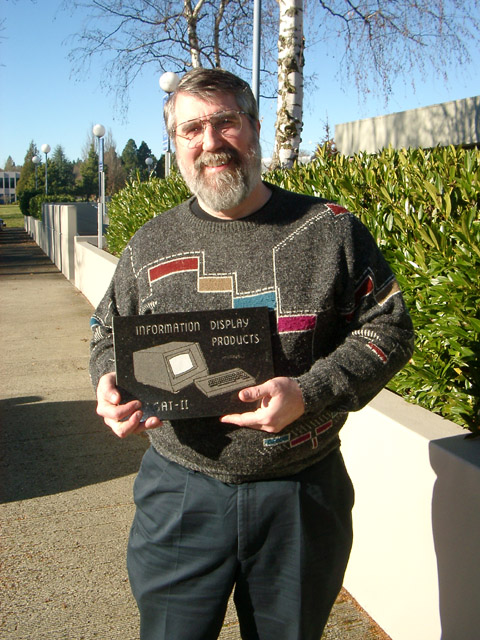
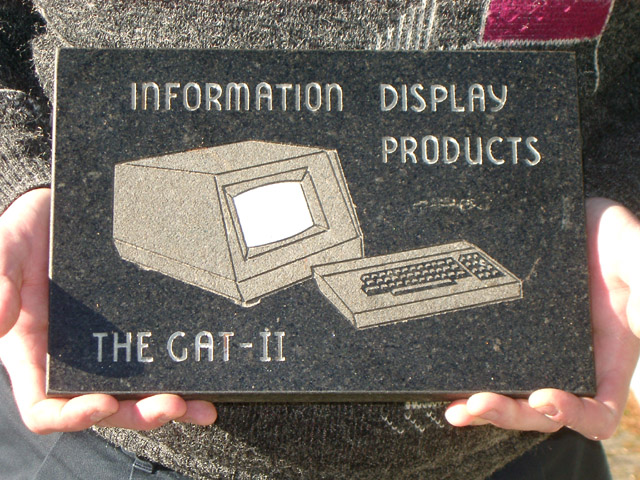
My first job at Tektronix was on the 4025 GAT-II (Great American Terminal) project. This was the first Tektronix video (i.e. non-DVST) graphics terminal. My job previous to Tektronix was a stonecutter at Olympia Monument Works. I cut granite and really enjoyed the craftsmanship of the work. This was before computers so everything was hand drawn and hand cut. I cut a stone for the project and presented it to the project leader Stan Davis. Many years after Stan left Tektronix he brought by his stone so I could get these pictures. I added this story to the vintageTEK website.
We also did a lower cost 4024. Here is a 4024 (left with forms fill-out) and a 4025 (right with graphics).
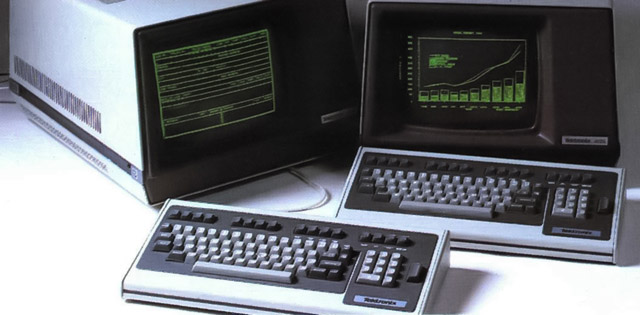
4025 page from the 1978 Tektronix Catalog
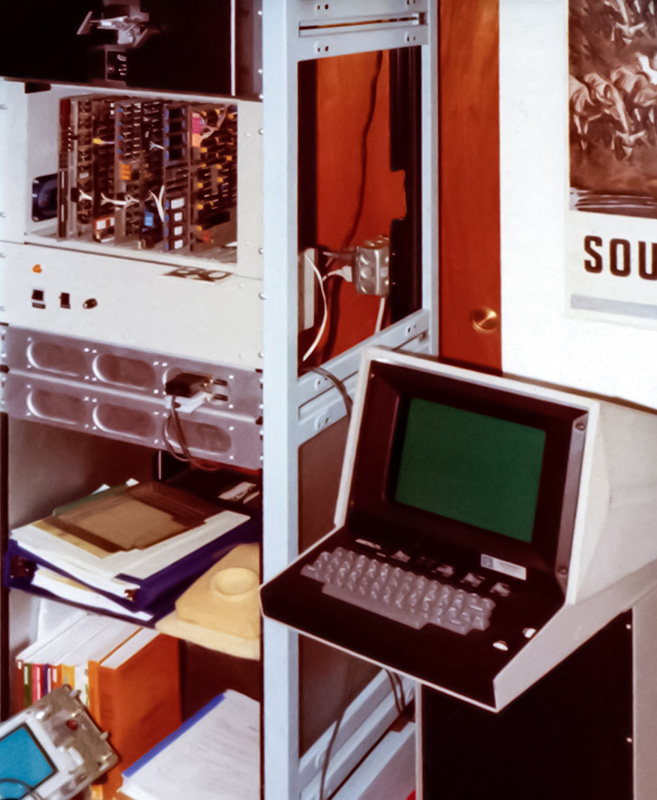
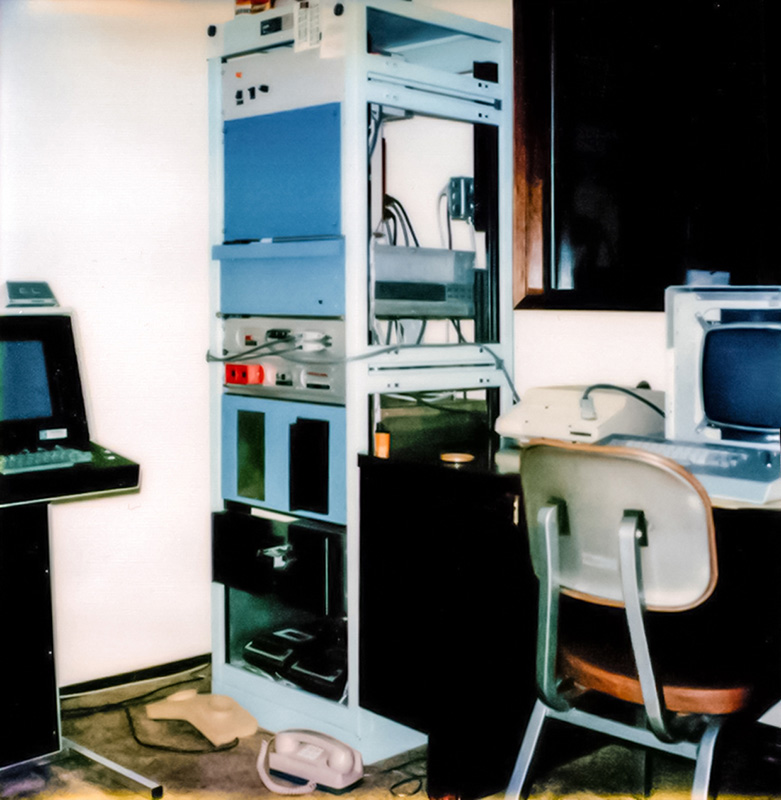
The 4025 was built around an 8080 microprocessor and my first design responsibility at Tektronix was the microprocessor and memory boards. I built my first home computer using a modified version of this design to be compatible with the interrupt and IO addresses of the Processor Technology SOL-20. That gave me access to a number of SOL-20 applications. I designed and wire-wrapped a 48 kbyte DRAM board and a parallel IO board to interface to a fan-fold paper tape reader. I bent the sheet metal for the power supply and card cage and mounted it all in a 19" rack. I had a 4010 DVST terminal for superb graphics. In this photo I have my work oscilloscope so I am still designing and debugging the system. Click on the image to pop up a photo without the legends.
Later I built a dual cassette interface and modified a Victor calculator to be a 40 column printer. I interfaced the printer through another parallel port and drove the print wires directly. I wrote the software to support printing in black, red, or double wide. It was perfect for most BASIC listings. The red box is a military surplus double button with the legend "To Destroy Special Radio Press Both Buttons Simultaneously" which was the system reset button. Above it is an AM radio I used to analyze code and debug by listening to the interference. Click on the image to pop up a photo without the legends.
I had to design and build many of the boards in this system. Here is an example of one that is a joystick interface. I used the 8080 to do a successive approximation so this board has a D/A, comparators, and the usual data and address decoding. I preferred hand wiring to wire wrap. What a bunch of work.


I got tired of always having to design and build my boards so I designed an interface adapter to the S-100 bus and bought a card cage/power supply so I could add purchased boards. I added a dual 8" floppy disk interface and a 24x80 video card. I added a keyboard through a parallel port and built a 300 baud acoustic coupler. I found the S-100 cards so poorly designed that by the time I made all the modifications it would have been simpler and faster to just design and build it myself. Click on the image to pop up a photo without the legends.
4105 Terminal
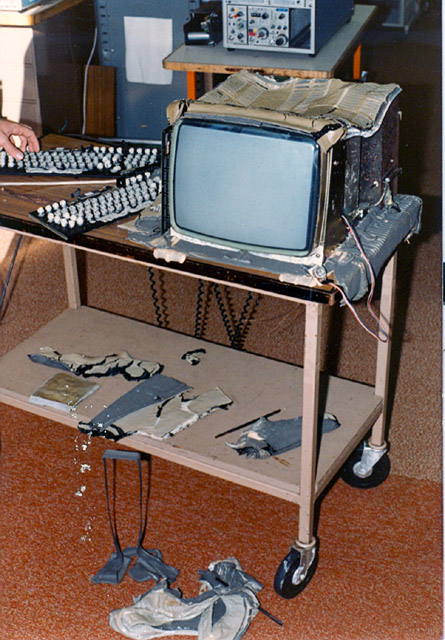
Years later I was working on the 4105 Unicorn project which was a low cost color graphics terminal. We had an early prototype with an expensive hand-made plastic cabinet in a 5 day humidity test. I got a call after the weekend from Bob Haas who discovered the terminal and took these photos. We never knew how hot the chamber got when it malfunctioned as the temperature graph simply pegged at the maximum. I added this story to the vintageTEK website.
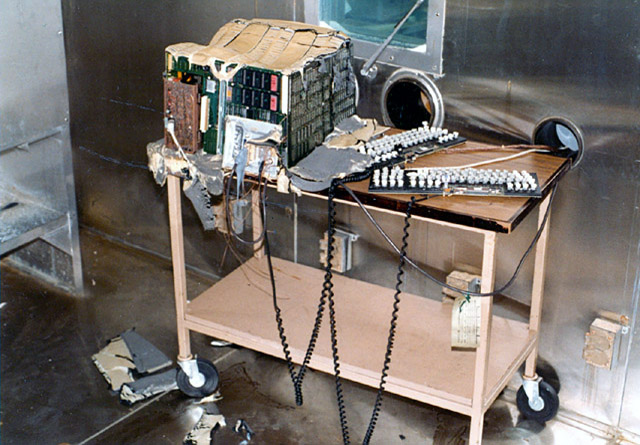
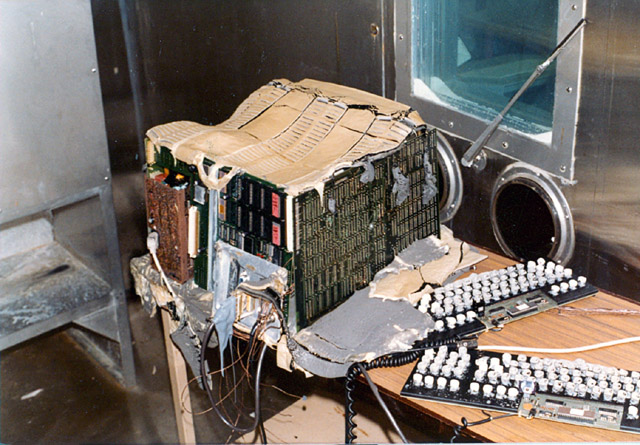
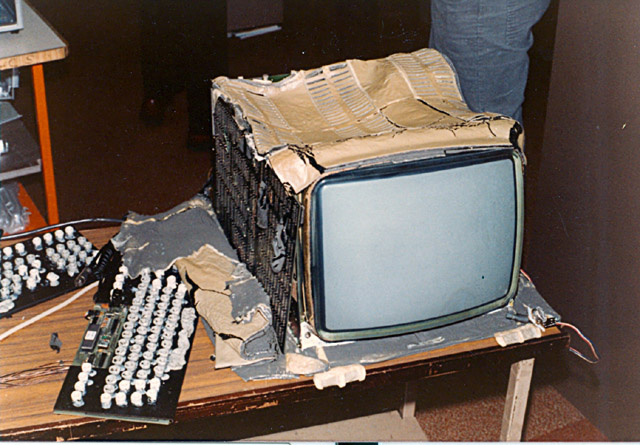
The thin vertical piece at the bottom of this photo is where the plastic had dripped down from the cart and melted around the electrical outlet box. The pieces on the bottom of the cart were from the floor.
4107 Color Terminal / 4170 Graphics Processing Unit
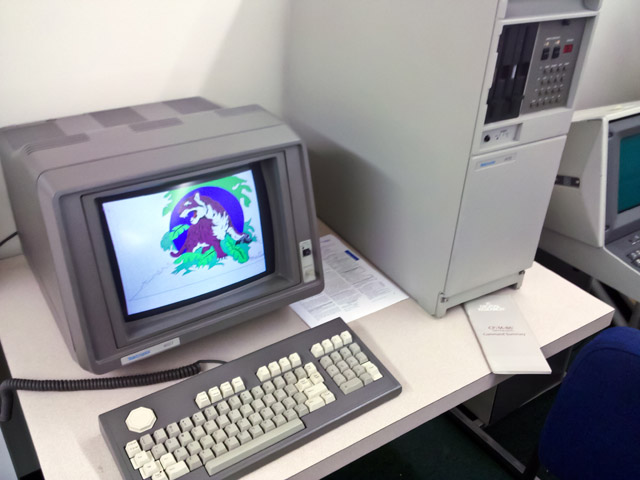
I've worked as a volunteer at the vintageTEK.org museum to get some of the Tektronix Information Display Division (IDD) products working. I got a 1983 4107 color graphics terminal with a 4170 local graphics processing unit fully functional. The 4170 uses the CP/M-86 operating system with dual 5.25" floppies and a 5 mbyte internal hard drive. This photo shows the 4107 drawing a vintage vector image. You can use the 4107 joydisk with the local color menu to change the image colors. This 4107 is a pre-production unit with a custom dark color. I had to rebuild the Keytronics capacitive keyboard which uses foam pads that completely deteriorate over time.
Vintage T&M
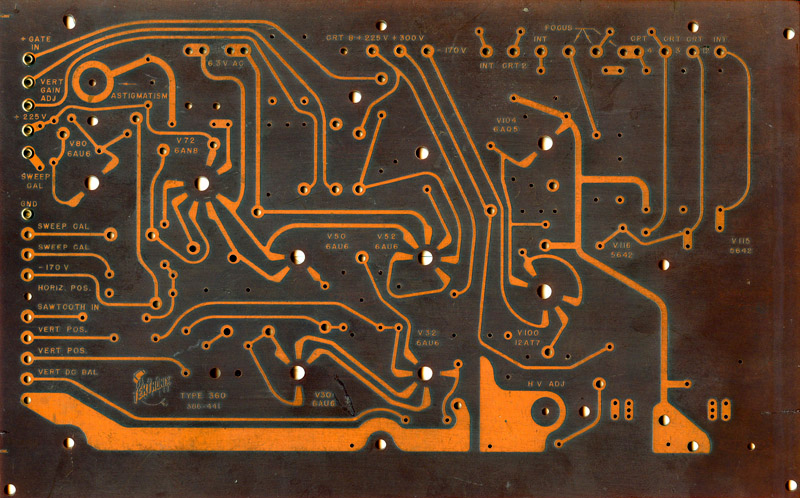
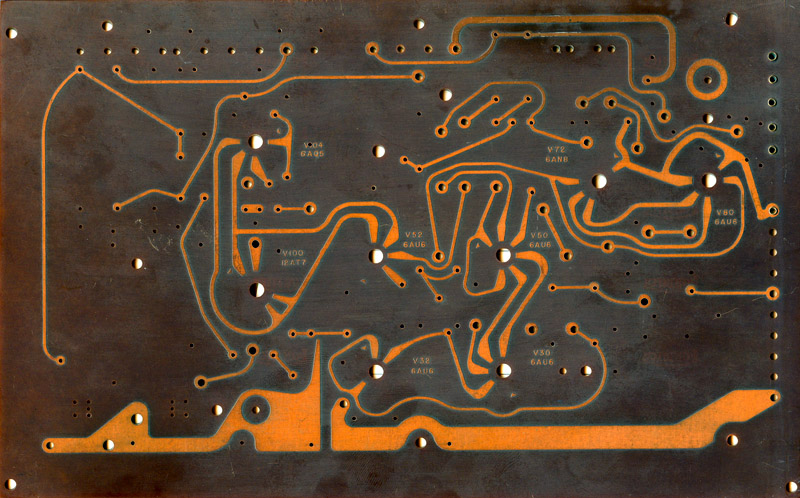
I collect and restore vintage radios from the '20's to the '40's. I bought several boxes of parts from the estate of a radio repair shop and these Tektronix PCBs were included. The Type 360 was a single channel portable oscilloscope introduced in 1957. Part numbers changed from 6 digits to 9 digits in 1966. I can find no records of the Type 360 ever having a PCB so I believe these might have been boards for early PCB evaluation.
The PCB is two sided copper with no plating. Six holes on the left are reinforced with eyelets. Some of the locations for tubes are puzzling as they are just pads without holes. I suppose the tube sockets may have had wires which were just bent over the pads and soldered (the first surface mount components?). The Astigmatism and HV Adjust locations are also puzzling as they are a circular trace around an unconnected hole. I suppose the center hole could have been drilled out to accommodate a potentiometer which was then wired to the PCB. Note the Tek logo is over etched.